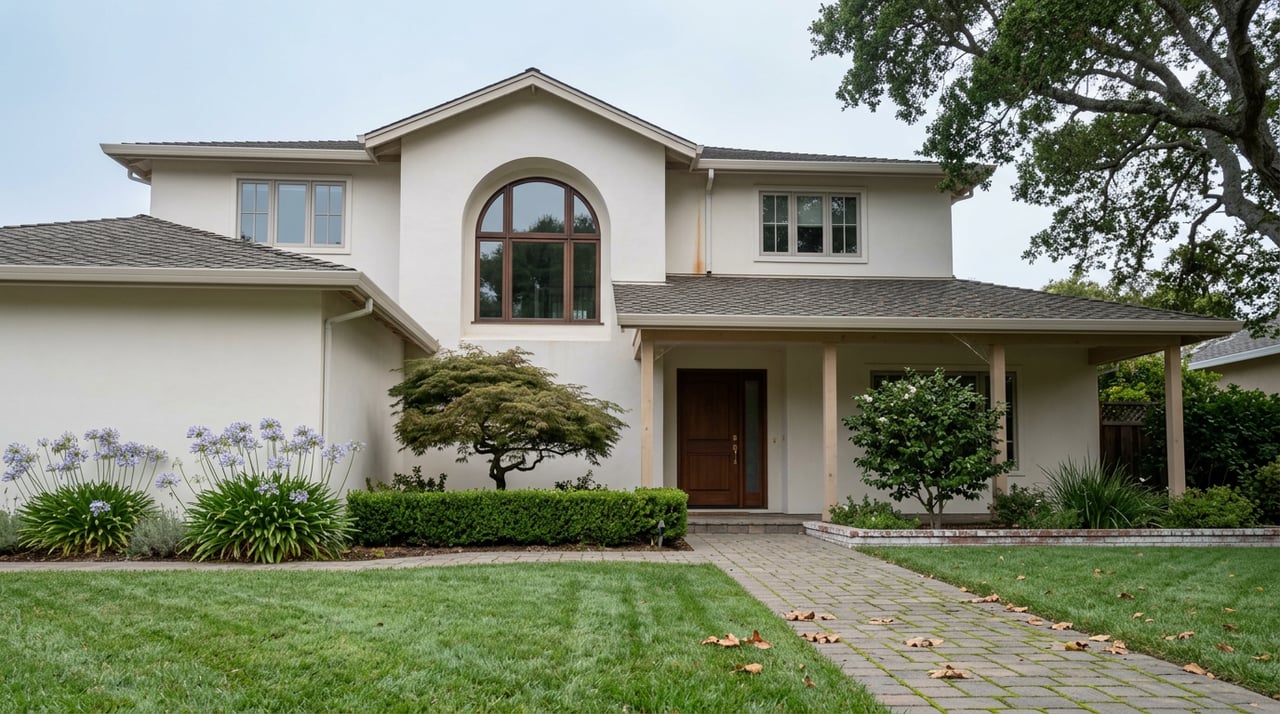
San Mateo Sewer Lateral Inspection at Point of Sale: What to Know
A seller in Burlingame knows exactly what is coming: a city inspector stands on the sidewalk and watches water level in a sealed pipe for thirty minutes. A seller in Millbrae knows too: a camera goes down the line, and the video either shows a clean pipe or it doesn't. A seller in San Bruno only has to worry about this at all if the house is fifty years old or older.
A seller in San Mateo gets none of that certainty. The city requires the inspection before a home changes hands, but it does not tell you how the test has to be done, what equipment counts, or who has to be standing there when it happens. The plumber your listing agent recommends decides the method. A different plumber might decide differently. That gap is not a paperwork oversight. It is the reason two identical San Mateo houses on the same block can have two very different experiences getting to closing.
San Mateo's Private Sewer Lateral Ordinance lives in Municipal Code Section 7.38.432, first adopted in 2011 and revised effective December 1, 2020. The revision set four separate triggers, and a home sale is one of them:
If you are selling a single-family home in San Mateo, trigger one applies to you almost automatically. The city's ordinance page lays out the mechanics, and the requirement itself is not unusual. What is unusual is what happens next.
Compare San Mateo to the cities around it and the gap becomes obvious. Burlingame's Sewer Lateral Test Ordinance 1329 requires a witnessed infiltration test, meaning a city representative has to be present while the test happens, and a passing result is good for ten years, or twenty-five years if the lateral was fully replaced. Millbrae's municipal code, Section 8.20.450, requires an in-line closed circuit video inspection before close of escrow, with an exemption if the line passed within the last five years or was replaced within the last twenty. San Bruno's ordinance, Municipal Code 10.13, took effect in May 2015 and only reaches homes originally built fifty years ago or older, a rule that traces back to a Baykeeper lawsuit and a citywide consent decree.
San Mateo sets none of that. A licensed plumber or contractor performs the inspection, submits the results, and the city treats that report as proof of compliance. There is no city-issued Certificate of Compliance the way some neighboring cities provide. There is no mandated camera, no mandated witness, no mandated water test. The standard that exists is a scoring rubric applied after the fact: a passing lateral has no structural defect graded a 5, no operational defect graded a 4 or 5, and a combined defect score under 13 across the whole line. How the inspector arrives at that score is left to professional judgment.
| City | What triggers it | Method required | Certificate issued by city |
|---|---|---|---|
| San Mateo | Sale, $90K+ remodel, overflow, class change | Not specified | No, report serves as proof |
| Burlingame | Sale | Witnessed infiltration test | Yes |
| Millbrae | Sale | Video inspection | Yes |
| San Bruno | Sale, homes 50+ years old | Inspection per city code | Yes |
That is not a technicality. It means the outcome of your inspection depends more on which contractor you hire in San Mateo than it does in any of the three cities next door.
San Mateo has plenty of homes built well before the 1970s, the same general era that saw widespread use of Orangeburg pipe across older Bay Area neighborhoods, a tar-impregnated fiber material adopted during World War II-era metal shortages. It was considered a reasonable substitute at the time. Decades later, it is a common source of flattening, cracking, and eventual collapse underground, a pattern plumbing contractors serving the Peninsula have flagged as an increasingly common discovery during pre-sale inspections. A lateral built from that material does not always announce itself with a backup. Sometimes the only sign is what a camera or pressure test finds once escrow is already underway.
That is the scenario worth planning around. Not "will my lateral fail," but "what happens to my timeline if it does, in a city where the test itself has no fixed shape."
Before assuming the inspection is unavoidable, check whether your property already qualifies for an exemption under the ordinance. You are not required to test if any of the following apply:
If you replaced your lateral after a 2019 remodel, for instance, you may already be covered. It is worth checking city permit records before assuming you need to hire anyone.
If your lateral does need work, San Mateo runs a Private Sewer Lateral Cost Sharing Program that reimburses 50 percent of your lowest approved bid, up to a $2,500 maximum, toward a full lateral replacement. The program has real limits worth knowing before you count on it. It only covers full replacement, not spot repairs or partial fixes. It is not retroactive, so work completed before your application is accepted does not qualify. You need three written quotes from licensed contractors submitted for city approval before any work begins, and for the 2026 cycle, applications opened July 1 and are reviewed only on Mondays and Fridays. Recipients also receive a 1099-G, since the reimbursement counts as reportable income.
None of that makes the program bad. It makes it something you plan around rather than something you discover the week before you wanted to list.
San Mateo's single-family market has not slowed down enough to absorb a surprise delay gracefully. In March 2026, the city closed 36 single-family transactions at a median sale price of $2,375,944, with homes averaging 12 days on market and selling at 111 percent of asking. A market moving that fast rewards sellers who have already cleared the paperwork obstacles before the first offer comes in, and punishes the ones who find out about a failed lateral after they are already in contract.
The practical move is to order your inspection before you list, not after you accept an offer. That gives you time to use the cost-sharing program if you qualify, time to get three quotes if a repair is needed, and time to close the gap between "the ordinance requires this" and "here is what my specific inspector found," instead of negotiating repair credits against a buyer's shortened timeline.
Does San Mateo issue a Certificate of Compliance like some other cities? No. The city does not provide inspections or certificates. Your licensed plumber's inspection report is the proof of compliance the city accepts.
What if my home already passed an inspection a few years ago? If the inspection happened within the past five years and either required no repairs or had its required repairs completed, you may be exempt from testing again at sale.
Can I use the cost-sharing rebate for a repair I already paid for? No. The program requires city approval of your quotes before work starts. It does not reimburse work completed before acceptance into the program.
Does this ordinance apply if I'm buying rather than selling? The sale trigger applies to the property, not to one party. As a buyer, you can ask whether the seller has already completed or exempted the inspection before you're deep into your own contingency period.
Rules like this are exactly the kind of local detail that turns a routine sale into a stressful one if nobody catches it early. If you're weighing a sale in San Mateo and want a clear read on timing, costs, and what your specific property might require, Wang Tang Group can walk through it with you. Request a free home valuation to start the conversation before your inspection window becomes your closing deadline.
Jenny and Carmen live with their families in the Peninsula and are trusted by hundreds of clients, having successfully closed countless transactions across San Mateo, San Francisco, Santa Clara, and Alameda counties. From property upgrades, inspections, and strategic marketing to finding the best lenders, they guide clients through every step of the real estate journey.

Wang Tang Group
Address
1440 CHAPIN AVE STE 200
BURLINGAME, CA 94010
Jenny Wang | CA DRE# 02063767
Carmen Tang | CA DRE# 01974969